
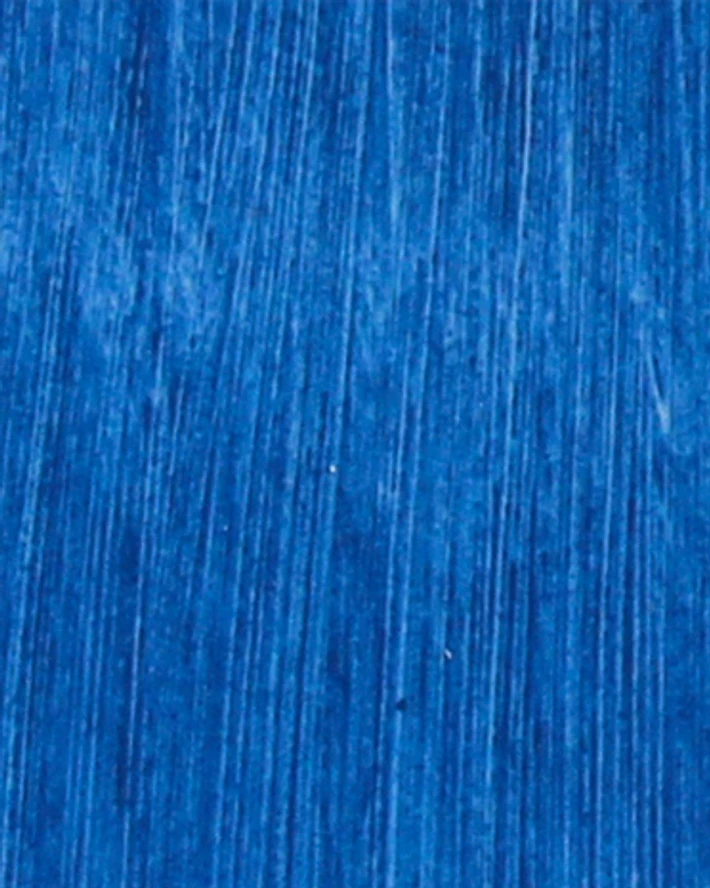
Lapis Lazuli (Afghan)
Inorganic, natural earth-This is the purest and oldest form of the Lapis Lazuli pigment, a genuine earth from Afghanistan. Lapis was the inspiration for the modern synthetic ultramarine blue, whose colour is a deeper, less dirty blue than Lapis; the handling qualities are identical. This is the blue that the Old Masters used for centuries. This pigment is expensive and rare. Lapis Lazuli and Azurite are a family of natural earth pigments and were the source of the famous blues of the Middle Ages. There are plenty of books that deal with this subject superbly, but I feel it’s appropriate that I say a few things about it… The first and most noticeable thing about Lapis, when one compares it to the modern synthetic equivalent ultramarine blue, is the reduced tinting and covering power and slightly dirtier colour, though neither of these traits should detract from the natural beauty. If you are looking for a blue of great sharpness with huge, explosive possibilities, and tinting ability that can poke your eye out even when mixed with another colour, try Phthalocyanine Blue instead. Lapis is a different creature. My own inclination is to create the painting for the colour rather than the colour for the painting. When combined with Terre Verte and other earth colours, Lapis is at home. Spread it out as a wash across a landscape at the horizon line, and it’s done. Or add it as a toner to cool shadows in portraits. The choices, of course, are yours, and as I always say, it’s the artist who does the hard part! When I first assessed the feel and nature of this pigment, it was instantly clear it would have to be milled/dispersed gently and carefully. Hand grinding was interesting but didn’t quite yield its deepest nature as the crisper colour isn’t quite achieved in this way, so I elected to use a stone roller mill. The relationship between stone and oil seemed more harmonious; to my mind, using a steel roller machine would have been sacrilegious. The paint’s texture is slightly granular, almost fluffy in its body, and when stroked between fingers you feel the slight, sandy particles, which are up to 20 microns in size but still minute. The synthetic Ultramarine Blue feels more like a gel, as if there are no particles-because the particles are less than a micron in size. I do see that the making of Lapis was a great challenge, and I feel almost nervous yet possessive about making it available. In the summer of 2007, I met David Hockney and Lucien Freud at the Royal Academy in London. At the time, David was having a private showing of his giant tree painting, and I thought it would be fun to present each artist with a tube of Lapis. Considering the nature of both artists’ works, I had expected more of a reaction from Lucien. But I’m delighted to say that it was David’s interest and subsequent order for my Lapis that convinced me to add it to our range. As with all oil colours, to achieve the best in terms of lightfastness, I suggest you cure Lapis oil paint in a good light, as this alleviates linseed’s tendency to go murky.
Lapis Lazuli (Afghan) is a single-pigment Michael Harding oil colour made with PB29 (Inorganic).
It is semi-transparent, not tested lightfastness, average drying time, low tinting strength.
It is ground in linseed oil with low oil content.
- Code
- No. 702
- Series
- Series 7
- Pigment Index
- PB29
- Pigment Type
- Inorganic
- Oil / Vehicle
- Linseed Oil
- Sizes
- 40ml · 60ml · 225ml, 1L, 2.5L, 5L
- Lightfastness
- Not tested
- Opacity
- Semi-Transparent
- Drying
- Average
- Oil Content
- Low
- Tint Power
- Low
- Toxicity
- Non-Toxic
Measured colour data
Loading measured pigment data…
Tint · Tone · Shade · Glaze
Preview how Lapis Lazuli (Afghan) behaves when mixed, toned, shaded and glazed. Each swatch is computed from the masstone using a perceptual subtractive model - an approximation for guidance, not a formulation guarantee.

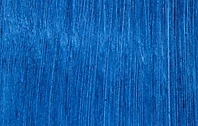
Lapis Lazuli (Afghan) straight from the tube.
A thin wash over white.
Mixed with Titanium White.
Mixed with a mid neutral grey.
Darkened with a chromatic black.
A thin transparent film over white.
Compare with nearby colours
See Lapis Lazuli (Afghan) side-by-side with its closest neighbours in the range — chemistry, opacity and lightfastness at a glance.
Popular combinations
Open Lapis Lazuli (Afghan) in the Virtual Mixing Studio to preview how it combines with these partners before you reach for the palette.
Open Lapis Lazuli (Afghan) in Mixing StudioLapis Lazuli (Afghan)
Available from 113 verified stockists worldwide
- Above Ground Art SuppliesVisit store · 74 McCaul St, Toronto, Canada · store.abovegroundartsupplies.com
- Antichita Belsito s.r.l.Visit store · Via Giovan Battista Gandino 34, Rome, Italy · antichitabelsito.it
- AP Fitzpatrick Fine Art MaterialsVisit store · 142 Cambridge Heath Road, United Kingdom · shop.apfitzpatrick.co.uk
- Aquarelle et PinceauxVisit store · 66 Rue Jean Tirole, Saint Laurent des Arbres, France · aquarelleetpinceaux.com
- Arbat Art suppliesVisit store · Go Vap District, Viet Nam · arbat.com.vn
- ART AND CRAFT WORLDVisit store · UNIT 1, 6 BOAG PLACE, MORLEY, Australia · artandcraftworld.com.au
- Art and HomeVisit store · 145-147 High Street, Holywood, United Kingdom · artandhomeweb.com
- Art Materials Fine Art SuppliesVisit store · Australia, Australia · artmaterials.com.au
- ART SMARTVisit store · 50 ETHEL ST SEAFORTH, Australia · artsmartartstore.com
- Art Supply WarehouseVisit store · Westminster, United States · artsupplywarehouse.com
- Art Supply WarehouseVisit store · Westminster, United States · artistcraftsman.com
- ART TO ARTVisit store · 69 GLEN OSMOND RD,EASTWOOD, Australia · arttoart.net
- Arte21Visit store · Online Only, Spain · arte21online.com
- ArtemirandaVisit store · Conde de Orgaz 1, Salamanca, Spain · artemiranda.com
- ARTERYVisit store · 137 COLLINS ST HOBART, Australia · arterydirect.com.au
- ARTiculations Art SupplyVisit store · 2802 Dundas St W, Toronto, Canada · articulations.ca
- Artreq LtdVisit store · Unit 49, Anniesland Industrial Estate,, United Kingdom · artreq.co.uk
- ARTSCENEVisit store · 916 VICTORIA RD WEST RYDE, Australia · artscene.com.au
- Artwrite (Hythe) LtdVisit store · 13A Tower Street, Rye, United Kingdom · artwrite.co.uk
- Astor's Bookshop & Art SuppliesVisit store · Bedford House, 2 The Square, Chagford, United Kingdom · astorsbookshop.com
- ATELIER ART SUPPLIESVisit store · 8/199 CHAMPION RD WILLIAMSTOWN NORTH, Australia · atelierartsupplies.com.au
- AtlantisVisit store · Unit 1, Bayford Street Ind Centre, United Kingdom · atlantisart.co.uk
- Barna ArtVisit store · C/ Córcega 394, Spain · barna-art.com
- BelleArti.netVisit store · via Giovanni XXIII, 45, Italy · bellearti.net
- Bird and DavisVisit store · 115a Brunswick Park Road, United Kingdom · birdanddavis.com
- Blaine's Art Co.Visit store · 1025 Photo Ave Anchorage, United States · blainesart.com
- BlickVisit store · Online Only, United States · dickblick.com
- Blue RoosterVisit store · Los Angeles, United States · blueroosterart.com
- Bradbury Graphics ArtstoreVisit store · 4 Callender Street, Northern Ireland · bradburyart.co.uk
- BROMLEYS ART SUPPLIESVisit store · Unit 13 Lodge Bank Estate, Crown Lane, Horwich, United Kingdom · artsupplies.co.uk
- Cass - BirminghamVisit store · 19 Corporation Street,, United Kingdom · cassart.co.uk
- CENTRAL ARTIST SUPPLIESVisit store · 226 FULLARTON RD GLENSIDE, Australia · centralartistsupplies.au
- CHAPMAN & BAILEYVisit store · 420 JOHNSTON ST ABBOTSFORD, Australia · chapmanbailey.com.au
- Cowling & Wilcox - AyleshamVisit store · Unit 7A C T 3 Business Park, Cooting Road, Aylesham, United Kingdom · cowlingandwilcox.com
- Creativando Arte & HobbyVisit store · Viale Regina Margherita, 4, 95125, Italy · creativandoartehobby.it
- DADAE S.R.L.SVisit store · Corso Papa Giovanni XXIII 19, Aprilla, Italy · dadae.it
- de Gerenday's Fine Art Materials and CuriositiesVisit store · Old Lyme, United States · degerendays.com
- Delta ArtVisit store · 11116-120 Street, Edmonton, Canada · deltaart.ca
- Details Art ShopVisit store · 67 Westgate Road, Newcastle Upon Tyne,, United Kingdom · details.co.uk
- Dirk Weber Fine Artist MaterialsVisit store · Kaiserstrasse 16, Bonn, Germany · dirkweberbonn.de
- Ditta. G. PoggiVisit store · Via Po, 45/b, Italy · poggi1825.it
- Eckersley's PrahranVisit store · 120/124-126 Commercial Rd,, Australia · eckersleys.com.au
- Evans Art SuppliesVisit store · 5-6 Meeting House lane, Mary's Abbey, Ireland · store.evansartsupplies.ie
- Fantasmus ApsVisit store · Knagevej 8, Sakskøbing,, Denmark · fantasmus.com
- FärgVisit store · Storgatan 83D, Sweden · farg.nu
- Flax Art OaklandVisit store · Oakland, United States · flaxart.com
- Fred Aldous LtdVisit store · 34 Kirkgate,, United Kingdom · fredaldous.co.uk
- GEELONG ART SUPPLIESVisit store · 92-94 RYRIE ST GEELONG, Australia · geelongartsupplies.com.au
- Genie LLC. JapanVisit store · Tokyo, Japan · store.shopping.yahoo.co.jp
- GIOSI SRLVisit store · Via Santa Maria di Costantinopoli 25, Naples, Italy · giosibellearti.com
- GORDON HARRISVisit store · 4 Gillies Avenue, Newmarket, Auckland 1023, New Zealand · gordonharris.co.nz
- Great ArtVisit store · 41-49 Kingsland Road, United Kingdom · greatart.co.uk
- Green & Stone LtdVisit store · 251 - 253 Fulham Road, South West London, United Kingdom · greenandstoneshop.com
- GWARTZMAN'S ART SUPPLIESVisit store · 448 Spadina Ave, Toronto, Canada · gwartzmans.com
- Hoa Pham 62Visit store · B?nh Th_nh District, Viet Nam · hoapham62.com
- Hyatt's All Things CreativeVisit store · Buffalo, United States · hyatts.com
- Italian Art Store - Now Jacksons Art USVisit store · USA, United States · jacksonsart.com
- JACKSONS BALCATTAVisit store · 76 ERINDALE RD BALCATTA, Australia · jacksons.com.au
- Jeco Bellas ArtesVisit store · Pelayo 38, Madrid, Spain · jecobellasartes.es
- Jerry's ArtaramaVisit store · Tempe, United States · jerrysartarama.com
- Johannes Gerstäcker Verlag GmbHVisit store · Der Markt, Wecostraße 4, Denmark · gerstaecker.de
- K.E.M. A/LVisit store · Brenneriveien 9B,, Norway · kem.no
- Konstnarernas CentralkopVisit store · Stockholm, Sweden · konstnarernas.se
- Kunst og utstyr ASVisit store · Nordalveien 101, Tranby, Norway · kunstogutstyr.no
- Kunstnerfarver dkVisit store · Gammel Kongevej 148, Frederiksberg, Denmark · kunstnerfarver.dk
- L. Cornelissen & SonVisit store · 105 Great Russell Street, United Kingdom · cornelissen.com
- LAUNCESTON ARTVisit store · 61 INVERMAY RD INVERESK, Australia · launcestonartcentre.com.au
- Lavender Hill ColoursVisit store · Unit 146 Battersea Business Centre, 99-109 Lavender Hill, Battersea, United Kingdom · lavenderhillcolours.com
- Lawrence Art SuppliesVisit store · 208-212 Portland Road, Hove, United Kingdom · tnlawrence.com
- LEVERSVisit store · 30 FLINDERS ST WOLLONGONG, Australia · levers.com.au
- Lovelys GalleryVisit store · 248, Northdown Road, Cliftonville, United Kingdom · lovelysgallery.co.uk
- Loxley ArtsVisit store · 26E Orgreave Crescent, United Kingdom · loxleyarts.com
- Magasin SennelierVisit store · 3, Quai Voltaire,, France · magasinsennelier.art
- MC Art SuppliesVisit store · 2025 Washington Ave, Waco,, United States · mcartsupplies.com
- MELBOURNE ART BRUNSWICKVisit store · 18-20 MICHAEL ST BRUNSWICK, Australia · melbourneartsupplies.com.au
- Merri ArtistVisit store · McMinnville, United States · merriartist.com
- Milliken BrosVisit store · 11 Main Street, Greyabbey, Northern Ireland · millikenbros.com
- Minerva Art SuppliesVisit store · 12A Trim Street, Bath, United Kingdom · minervaartsupplies.co.uk
- Mister NP - Online OnlyVisit store · Online Only, Thailand · facebook.com
- Norwich Art SuppliesVisit store · 37 St. Benedicts Street, Norwich, United Kingdom · norwichartsupplies.co.uk
- OXLADES FORTITUDE VALLEYVisit store · 136 WICKAM ST, Australia · oxlades.com.au
- PAINT BOX ART SUPPLIESVisit store · 7 MOUNT BARKER RD HAHNDORF, Australia · thepaintbox.com.au
- Paper and Ink Arts | John Neal BooksVisit store · Nashville, United States · paperinkarts.com
- Pellegrini Walter & C. srlVisit store · Via Brera, 16, Italy · pellegrinibrera.com
- PictorShopVisit store · Bucharest, Romania · pictorshop.ro
- PullingersVisit store · 25 Fife Road, Kingston Upon Thames, United Kingdom · pullingers.com
- Rath Art SuppliesVisit store · 2312 Main St. Vancouver, Canada · rathartsupplies.ca
- Raymar Artist PanelsVisit store · Phoenix, United States · raymar.com
- Riley Street Art SupplyVisit store · Santa Rosa, United States · rileystreet.com
- Rochester Art / Fineartstore.comVisit store · Rochester, United States · fineartstore.com
- Rosemary & Co Artists BrushesVisit store · Carr Head Hall, Carr Head Lane, Cowling, United Kingdom · rosemaryandco.com
- Russell and ChappleVisit store · 30-31 Store Street, United Kingdom · russellandchapple.co.uk
- SENIOR ART EAGLEMONTVisit store · 85 SILVERDALE RD EAGLEMONT, Australia · seniorart.com.au
- Soho Art MaterialsVisit store · New York, United States · sohoartmaterials.com
- South West ArtVisit store · Old Fore Street, Town Centre, United Kingdom · southwestartmaterials.co.uk
- Stuart R StevensonVisit store · 68 Clerkenwell Road, United Kingdom · shop.stuartstevenson.co.uk
- SYDNEY PARKERS FINE ART SUPPLIESVisit store · BUILDING 22 CNR FORBES AND BURDON ST DARLINGHURST, Australia · parkersartsupplies.com
- Texas Art Supply Co.Visit store · Houston, United States · texasart.com
- THE ALCHEMISTVisit store · 104 MILLISON ST KYNETON, Australia · thealchemist.net.au
- The Art Muse GalleryVisit store · Woodinville, United Kingdom · artmusegallery.com
- The Art Shop & ChapelVisit store · No. 8, Cross Street, Abergavenny, United Kingdom · artshopmaterials.co.uk
- THE FRENCH ART SHOPVisit store · 16 TAYLORS RD SANDRINGHAM AUCKLAND, New Zealand · thefrenchartshop.co.nz
- The Heaton Cooper Studio LtdVisit store · Heaton Cooper Studio, Broadgate, United Kingdom · heatoncooper.co.uk
- The Italian Art ShopVisit store · Ground Floor, Riverside Mall Cnr Main Road & Rosendale Road, Rondebosch, South Africa · italianartshop.co.za
- The Oil Paint Store - Makati City BranchVisit store · 2nd floor, Makati Central (Cinema) Square, Chino Roces Ave, Legazpi Village, Makati,, Philippines · theoilpaintstore.com
- The Supreme Paint CompanyVisit store · No.1 Old Totnes Road, Buckfastleigh, United Kingdom · supremepaint.co.uk
- THE SYDNEY ART STOREVisit store · 11 SALISBURY ST BOTANY, Australia · thesydneyartstore.com.au
- Tindalls Arts and GraphicsVisit store · Cambridge, United Kingdom · tindalls.co.uk
- Truro Arts CompanyVisit store · 26 River Street, Truro, United Kingdom · truroartscompany.co.uk
- VICTORIAN ARTIST SUPPLIESVisit store · 715 MAIN RD ELTHAM, Australia · vicartsupplies.com.au
- West of Wales Art Supplies LtdVisit store · 22 Market Street, Haverfordwest, United Kingdom · wowartsupplies.co.uk
- Wet Paint Artists MaterialsVisit store · St. Paul, United States · wetpaintart.com
- Workshops in YorkshireVisit store · Skipton, United Kingdom · workshopsinyorkshire.com
More oil colours





Mixing and use
Spread as a wash across a landscape at the horizon line.
Add as a toner to cool shadows in portraits.
Making and formulation
Milled gently and carefully; a stone roller mill was chosen over hand grinding and steel for a harmonious stone-oil relationship.(this formulation)
Things to know
This is the blue that the Old Masters used for centuries; expensive and rare.(historical context)
Source: Michael Harding Art Formulas Ltd
What pigment is used in Lapis Lazuli (Afghan)?
Lapis Lazuli (Afghan) is made with PB29.
Is Lapis Lazuli (Afghan) a single-pigment colour?
Yes. Lapis Lazuli (Afghan) uses a single pigment (PB29), so its behaviour stays consistent and predictable on the palette.
Is Lapis Lazuli (Afghan) transparent or opaque?
Lapis Lazuli (Afghan) is semi-transparent.
Is Lapis Lazuli (Afghan) lightfast?
Lapis Lazuli (Afghan) has not tested lightfastness.
Is Lapis Lazuli (Afghan) vegan?
Yes. Lapis Lazuli (Afghan) contains no animal-derived ingredients and is suitable for vegan artists.
Artist Reviews
No reviews yet - be the first to share your experience with this colour.
Colour Disclaimer: Colours shown on screen or in print may vary from the actual product. For the most accurate representation of colour, texture and finish, we recommend viewing a physical sample or swatch in person before making your final selection.