
01 / CIELAB
A colour’s coordinates
L* describes lightness, a* the green-to-red axis, and b* the blue-to-yellow axis. Together they describe a measured colour, rather than its name alone.
We use essential cookies to run the site and optional analytics cookies to understand how you use it. Read our privacy policy.
40 New Anniversary Oil Colours - Now Available Explore Collections
Michael Harding / Colour Data Science
From a pigment’s identity to its measured colour, explore the data behind the paint. A shared starting point for curious artists and technical researchers.
 Pigment PG36 / Oil colour
9.69
L* · Lightness
-13.02
a* · Green / red
-4.10
b* · Blue / yellow
Catalogue masstone data, independently measured by Artist Pigments. Screen swatch is illustrative.
Start with the terms used in our product data. Use them to ask more precise questions about a colour, then bring that knowledge back to your palette.
01 / CIELAB
L* describes lightness, a* the green-to-red axis, and b* the blue-to-yellow axis. Together they describe a measured colour, rather than its name alone.
03 / Munsell
Munsell notation describes hue, value and chroma. It offers another framework for discussing colour relationships, alongside CIELAB coordinates.
02 / Chroma & hue
Chroma expresses distance from the neutral axis in CIELAB. Hue angle describes direction around that axis. Both can be calculated from a* and b*.
04 / Colour Index
Codes such as PB29 identify Colour Index pigments. They do not specify a complete paint formulation, and the same code does not guarantee identical handling or appearance.
Oil & watercolour
Pigment identity is only part of the story. Binder, application and support influence how a paint looks and behaves. Read each medium’s own specifications rather than transferring assumptions between them.
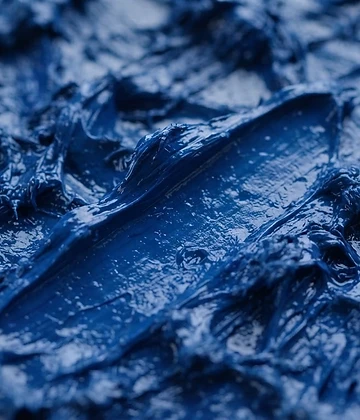
Consider opacity, tinting power, oil type and drying time. Adding white changes a mixture differently from making a thin, transparent layer.
Explore oil colour data →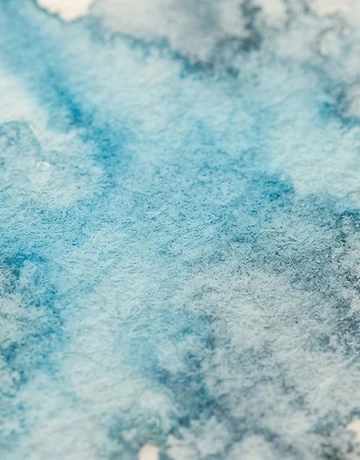
Consider transparency, staining and granulation. Water dilution and the paper beneath the wash affect appearance; granulation and staining are distinct properties.
Explore watercolour data →From knowledge to practice
Interactive colour chart
Browse swatches, filter the catalogue and explore colour relationships in the hue-wheel views.
Side-by-side specifications
Compare pigment identity and published product properties, including oil and watercolour selections.
Pigment guide
Explore Colour Index codes, pigment families and the Michael Harding colours that use them.
Mixing Studio · simulation
Preview approximate mixtures from digital swatches. A starting point for studio experiments, not a measured paint prediction.
Equivalent finder
Find colours by pigment code or common name. Shared pigment identity is not a guarantee of an exact colour match.
Palette Architect
Turn your discoveries into an oil colour palette, with practical choices for your painting practice.
CIELAB and Munsell masstone values shown on supported product pages are independently measured data credited to Artist Pigments. Availability varies by colour. Other catalogue properties describe the individual product and should be read in their own context.
Our Mixing Studio uses a digital approximation, not spectral measurements or a laboratory-validated mixing model. A preview is not evidence of an actual mixture’s colour, opacity, drying behaviour or permanence.
Need measurement conditions or help interpreting a particular colour? Ask our team a technical question.
Colour Disclaimer: Colours shown on screen or in print may vary from the actual product. For the most accurate representation of colour, texture and finish, we recommend viewing a physical sample or swatch in person before making your final selection.
Michael specifically developed forty new oil colours to give artists the luscious pigments he uses in his watercolours.
Handmade in South Wales
Every colour is milled by hand in our South Wales workshop using the finest pigments and traditional oils. No fillers, no extenders - just pure pigment and binder, made the way Michael Harding has since 1982.
Discover our process →
