

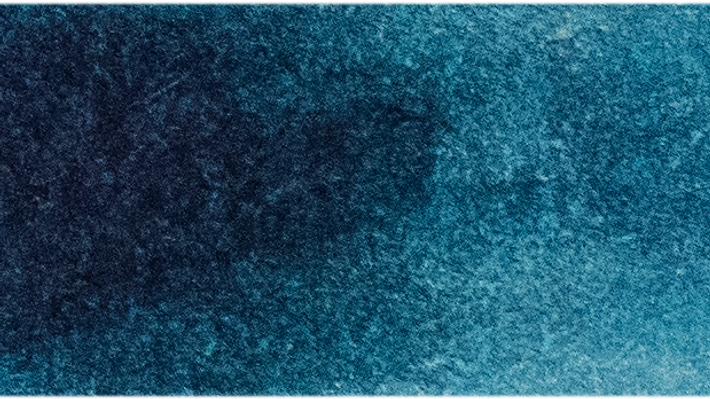
Granulation is the quality that gives watercolour its living texture. Where a smooth pigment lays down an even, glassy wash, a granulating pigment separates as it dries, settling into the tooth of the paper in delicate, mottled patterns. For skies, rock, water and atmosphere, granulation is not a flaw - it is the whole point.
What is granulation?
Granulation happens when pigment particles are heavy or uneven enough to settle out of the water film as it evaporates, pooling in the valleys of the paper. The result is a textured, granular surface that no solid, machine-smooth paint can imitate. It is a property of the pigment and the paper, not the brand.
Which pigments granulate
Some pigments granulate strongly by nature:
- Ultramarine Blue (PB29) - a classic granulating warm blue, the backbone of textured skies.
- Cerulean Blue (PB35) - granulating and semi-opaque, ideal for soft, atmospheric skies.
- Burnt Sienna and the iron oxides (PBr7) - sediment warmly for rock, earth and flesh.
- Viridian (PG18) - granulates lightly; cobalt blues granulate moderately.
Others - Phthalocyanine Blue (PB15), the quinacridones, the dioxazines - are fine, even pigments that lay down smooth and staining, with little or no granulation.
Granulating vs smooth pigments
Granulating pigments give you texture and atmosphere for free; smooth pigments give you clarity, even washes and staining intensity. Most professional palettes use both: granulating colours for skies and landscape, smooth colours for botanical and illustrative work where evenness matters.
Using granulation in your painting
Use a rough or cold-pressed paper to encourage granulation, work on a tilted surface so the pigment runs, and resist the urge to overwork the wash - granulation rewards patience. Explore granulating colours in our pigment pages, see them laid out by colour in the watercolour swatch library, or browse the full watercolour range with granulation published for every colour.