










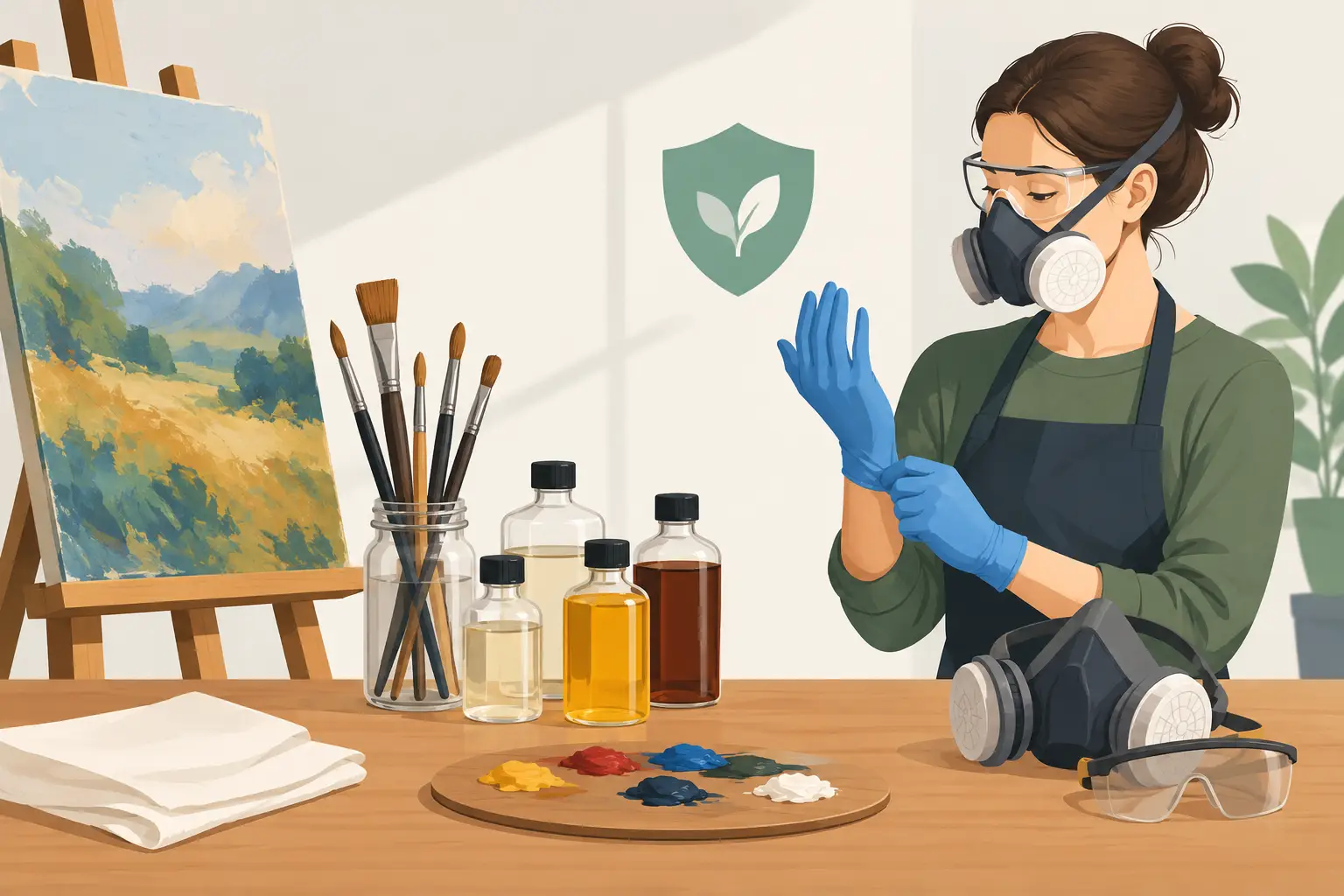
A medium is not merely an additive. It changes the handling, drying rate, gloss, transparency and structure of an oil painting - and it introduces its own studio considerations. This painting medium safety guide is designed to help painters make those choices with the same attention they give to pigment, palette and ground.
The right approach is neither fear nor casualness. Most studio risks are manageable when materials are understood, labels are read carefully and working habits are deliberate. A well-organised painting space protects the painter, preserves the work and allows concentration to remain where it belongs: on the painting.
Painting medium safety guide: begin with the formula
There is no single safety profile for all painting mediums. A refined linseed oil, an alkyd medium, a damar varnish medium and a solvent-free gel may each perform very differently on the palette and require different handling. The product label and Safety Data Sheet are the primary references for the specific material in front of you.
Drying oils, such as linseed, safflower and walnut oil, are commonly used to increase flow, transparency or richness. They are not interchangeable simply because they are oils. Linseed oil generally dries more quickly and forms a strong film, while safflower and walnut oil may be selected for their paler colour or particular handling. Adding too much oil, however, can produce a paint layer that is overly glossy, slower drying or structurally unbalanced.
Solvent-containing mediums need closer attention. They may offer a fluid, lean paint layer and rapid evaporation, but they can release vapours that are unpleasant or harmful in an enclosed room. Odour is not a reliable measure of exposure: a low-odour solvent still requires good ventilation and sensible use. Keep containers closed when not in use, dispense only the amount needed for the session and avoid working with open solvent jars beside the palette.
Alkyd mediums can accelerate drying and improve flow, which is useful when building paintings in successive sessions. Yet a quicker-drying surface is not automatically a better surface. Use alkyds with a clear purpose, follow the stated proportions and consider how their handling fits with the rest of the paint system. A medium should support the painting's structure, not dictate it.
Ventilation is a working tool, not an afterthought
For an oil painter using solvent-free mediums, ordinary studio cleanliness and airflow may be sufficient. For anyone using volatile solvents, varnishes or solvent-containing mediums, ventilation becomes a practical part of the process.
Work in a room with fresh-air exchange rather than relying on a scent diffuser, an open internal door or a small extractor intended for another purpose. Position the palette so vapours do not sit directly in your breathing zone. If weather permits, opening a window is useful, but cross-ventilation is more effective than a single narrow opening. In a dedicated studio, local extraction positioned near the source offers greater control.
There is a trade-off here. A cold, draughty studio can make painting uncomfortable and affect handling, while a sealed, heated room can concentrate vapours. The aim is a stable, workable space with a regular supply of fresh air. If a material makes you feel light-headed, irritated or unwell, stop working, move to fresh air and reassess the conditions before returning.
Do not treat a mask as a substitute for ventilation. Dust masks do not protect against solvent vapours. Respiratory protection, where appropriate, must be selected for the hazard, fitted properly and maintained correctly. For many painters, reducing solvent use and improving ventilation is a simpler and more reliable first step.
Skin contact, hands and studio habits
Paint on hands is common; using solvents to remove it should not be. Repeated solvent contact can strip the skin's natural barrier and contribute to dryness, cracking and irritation. Wipe excess paint away with a dry rag or paper first, then wash with soap and lukewarm water. A suitable barrier or moisturising cream after washing can help maintain skin condition, especially during long studio days.
Nitrile gloves can be useful for cleaning brushes, handling heavily pigmented materials, preparing grounds or working with mediums for extended periods. They are not compulsory for every brushstroke, and gloves that become covered in paint can transfer material just as readily as bare hands. Change them when contaminated and avoid touching mobile phones, door handles, spectacles or food while wearing them.
Keep food, drink and smoking materials away from the working area. This is particularly relevant when handling dry pigments, but it also prevents accidental transfer from paint, medium or cleaning residues. Wash hands before leaving the studio, even if you have worn gloves.
Fire safety: treat oil-soaked rags seriously
Drying oils cure by oxidation. As oil oxidises, it generates heat. Rags, paper towels or absorbent wipes soaked with linseed oil or oil-based medium can retain that heat, particularly when they are crumpled together. Under the wrong conditions, this presents a genuine fire risk.
Never leave oily rags in a loose pile or in an ordinary waste bin. Place them in a purpose-made, lidded metal container intended for oily waste, or store them submerged in water in a sealed metal container where appropriate to your local disposal arrangements. Arrange disposal according to local authority guidance and never pour oil, medium or solvent into a sink or drain.
Solvents also require careful storage. Keep them in clearly labelled, compatible containers with secure lids, away from naked flames, pilot lights, heaters and direct sunlight. Do not decant a solvent or medium into an unlabelled bottle, food container or drinking vessel. The label is part of the material's safety system.
Use the smallest effective amount
Many painting problems begin with the assumption that more medium produces a more professional result. Usually, the opposite is true. Oil paint is already a carefully balanced material, and a small addition of medium is often enough to alter brush flow or transparency.
Start with paint alone. Add medium gradually when there is a specific technical reason: to extend a glaze, improve levelling, alter the body of a passage or manage drying between layers. Record useful mixtures in a studio notebook, especially when working on a multi-session painting. This creates repeatable practice and reduces needless exposure to materials.
The traditional principle of fat over lean remains useful. Early layers should generally contain less oil and more volatile component than later layers, so lower layers do not remain more flexible than the paint above them. The exact approach depends on the medium, paint film, support and technique, but the principle encourages considered layer-building rather than indiscriminate additions.
Choose materials with the whole studio in mind
A solvent-free medium may be the sensible choice for a home studio, a shared teaching space or a painter who works in shorter sessions. It reduces one source of vapour exposure, though it does not remove the need for tidy handling, correct storage or responsible rag disposal. Water-mixable oil systems can also offer a practical route for some painters, but they should be used according to their own technical guidance rather than treated as conventional oils with water added at random.
Pigment information matters too. Mediums are only one part of the material picture. Some pigments require additional care, especially in dry form, and all paint should be handled with restraint and respect. Choosing clearly identified materials, including vegan or non-toxic options where they suit your practice, supports informed decisions without replacing sound studio discipline.
Michael Harding's approach to materials begins with clarity: know what is in the paint, understand what the medium is intended to do, and let each choice serve the painting rather than complicate it.
Keep a safer, calmer painting space
A disciplined studio does not need to feel clinical. It should simply make the right action easy. Keep mediums and solvents together in a designated area, use stable containers, label any decanted working quantities and clean spills immediately. Store paints and mediums out of reach of children and animals, particularly where curious hands or paws may encounter an open palette.
At the end of a session, close every container, deal with oily wipes, wash hands and leave the room aired where practical. These small actions are more valuable than elaborate equipment used inconsistently. They also protect the rhythm of your practice: when materials are stored properly and the palette is prepared with intention, returning to a painting becomes easier.
The finest medium is one used knowingly. Give it a precise role in the paint film, provide the conditions it asks for, and your studio can remain a place of both serious craft and sustained pleasure.